
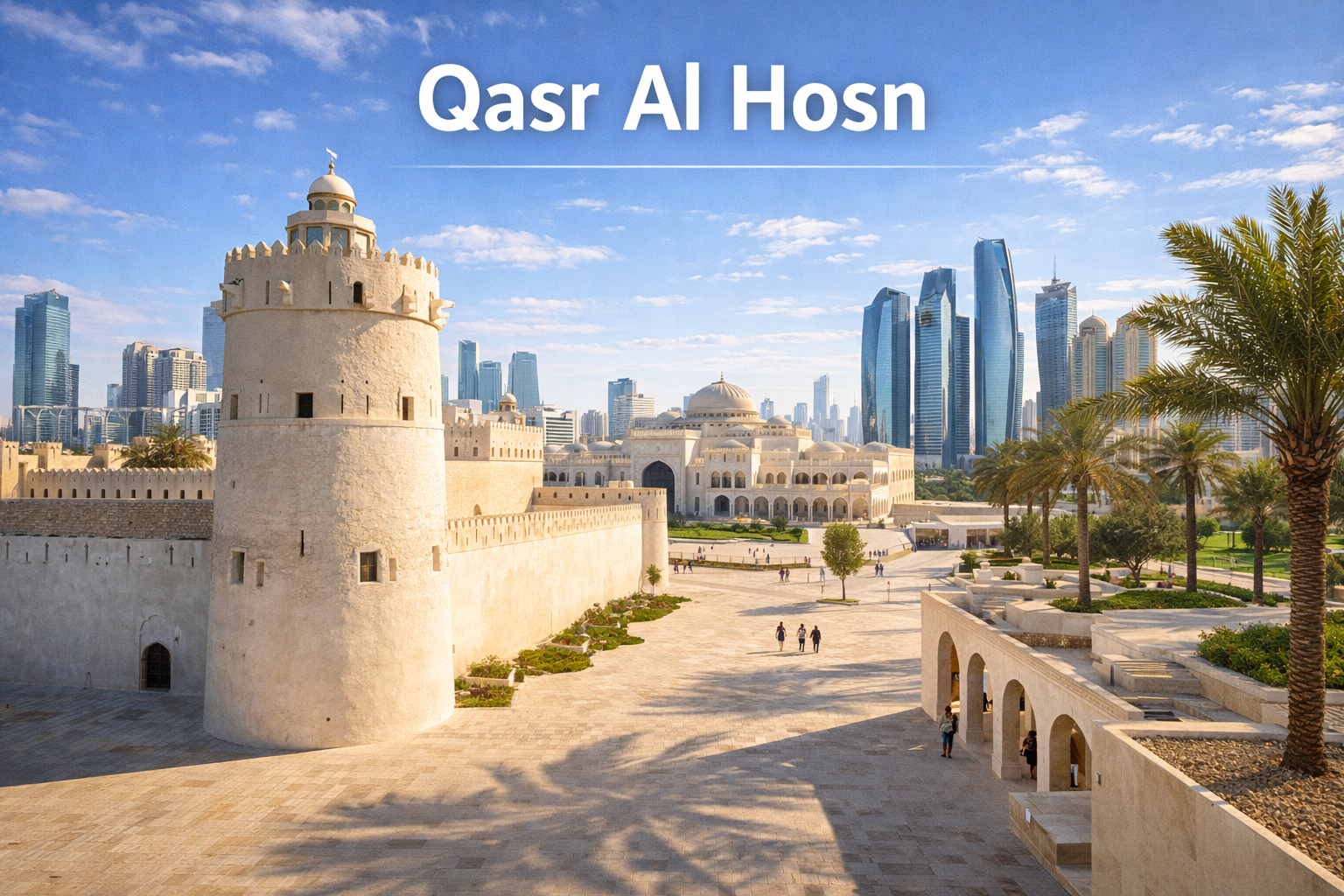
Qasr Al Hosn
Qasr Al Hosn is Abu Dhabi’s oldest stone building, a restored fort and cultural complex that tells the powerful story of the city’s origins, leadership, and transformation from desert settlement to modern capital.




Highlights
- Oldest surviving structure in Abu Dhabi
- Historic fort and former seat of ruling families
- Immersive exhibitions on Emirati heritage
- Beautifully restored architecture and courtyards
- Located in the heart of downtown Abu Dhabi
Description
Qasr Al Hosn stands as the physical and symbolic birthplace of Abu Dhabi. Surrounded by the modern city, this historic fort offers a quiet and powerful contrast, grounding visitors in the roots of the nation.
The complex includes the Inner Fort, Outer Palace, House of Artisans, and cultural courtyards. Together they create a space where history, architecture, and daily life intersect through stories of leadership, resilience, and community.
Walking through Qasr Al Hosn feels like stepping back into the rhythm of early Abu Dhabi, where coral stone walls, shaded walkways, and traditional craftsmanship preserve the memory of a city before oil and skyscrapers.
Best Time to Visit
The best time to visit Qasr Al Hosn is during the morning or late afternoon, when the light is softer and the courtyards are quieter.
October to April offers the most pleasant weather for exploring outdoor areas. Evening visits are also rewarding, especially during cultural events and seasonal programs.
Fun Facts
- The original watchtower was built to protect freshwater wells
- Qasr Al Hosn served as a royal residence for generations
- The fort was once the center of Abu Dhabi’s entire settlement
- Its walls are built from coral stone and sea rock
- The site hosts annual heritage and cultural festivals
Itinerary
Half Day Cultural Visit (Recommended)
Morning:
Begin with the Inner Fort and museum galleries.
Learn about early Abu Dhabi life, leadership, and trade.
Midday:
Visit the House of Artisans.
Observe traditional crafts and cultural demonstrations.
Relax in shaded courtyards.
Afternoon:
Explore temporary exhibitions.
Walk the perimeter to appreciate restoration details.
Photo Spots
- Inner Fort towers and walls
- Central courtyard with palm trees
- Coral stone textures and wooden doors
- Outer Palace facade against the city skyline
- Evening lighting during cultural events
Pro Tips
- Allow at least two hours for a relaxed visit
- Read exhibit panels for deeper historical context
- Combine with nearby downtown attractions
- Visit during festivals for live cultural experiences
- Photography is best in early or late daylight
History
Qasr Al Hosn began in the late eighteenth century as a simple watchtower built to guard freshwater sources on Abu Dhabi Island. Its strategic importance led to its expansion into a fort and later a palace, becoming the seat of power for the Al Nahyan family.
Throughout the nineteenth and early twentieth centuries, Qasr Al Hosn functioned as a royal residence, government center, and community hub. It witnessed the signing of key agreements and the early governance that shaped the emirate.
As Abu Dhabi modernized, the fort was preserved rather than replaced. Following extensive restoration, Qasr Al Hosn reopened as a cultural landmark, standing today as a symbol of continuity, leadership, and the enduring identity of the UAE.
Listen as a Song
A destination brought to life through music by Triplara.com
⭐ A story you feel, not just hear 🎧

🎟️ Ready to Plan Your Visit?
Most visitors book tickets in advance to avoid queues and sold-out days.
See Tickets
 Location Map
Location MapMore to explore
Automatically pulled from related stories and nearby places.
Related Stories

Abu Dhabi Liwa Desert Safari with Lunch
Escape the city and journey deep into the Liwa Desert on a guided safari featuring golden dunes, cultural experiences, roundtrip transfers from Abu Dhabi, and a relaxing lunch in an authentic desert setting.

Abu Dhabi Half Day City Tour with Transfers
Explore Abu Dhabi in just half a day with a guided city tour covering grand mosques cultural landmarks and modern attractions complete with comfortable roundtrip transfers for a smooth and stress free experience.

City Sightseeing Dubai & Abu Dhabi Hop On Hop Off Bus Tour
Discover Dubai and Abu Dhabi effortlessly with City Sightseeing hop on hop off bus tours covering top landmarks, cultural icons, beaches, and skylines with flexible routes and audio guides.

La Perle Live Show with Abu Dhabi Premium Day Trip
Experience the magic of La Perle live show in Dubai combined with a premium Abu Dhabi day trip. From breathtaking aqua stunts and world class performances to iconic landmarks like Sheikh Zayed Grand Mosque, this curated journey blends entertainment, culture, and luxury into one unforgettable experience.
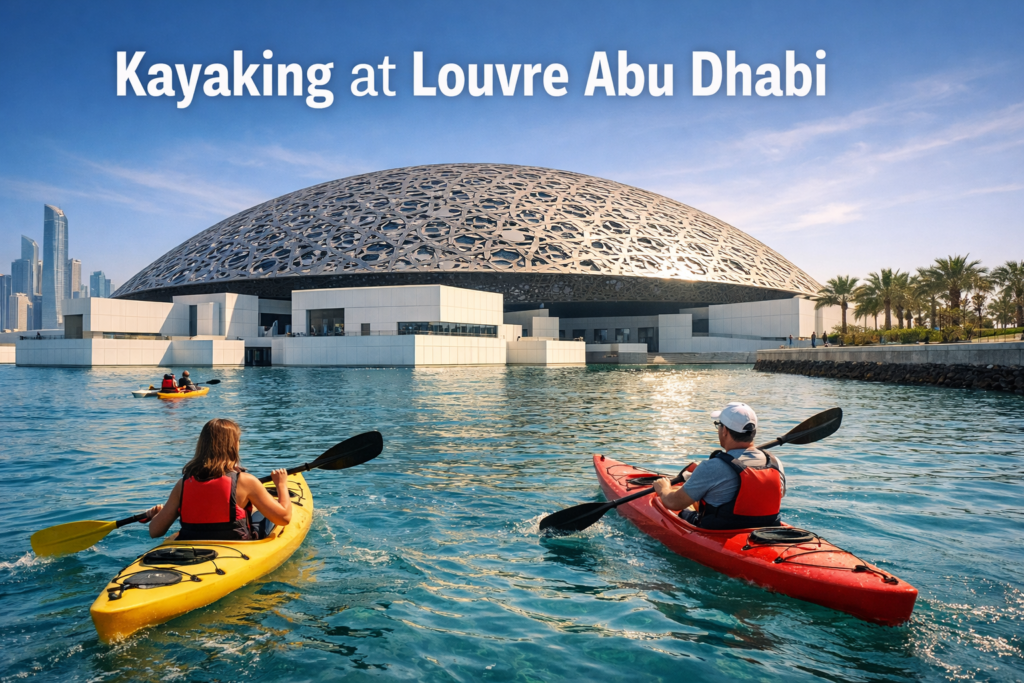
Kayaking in the Louvre Abu Dhabi
Experience kayaking at Louvre Abu Dhabi as you glide through calm waters beneath the iconic dome, offering a rare perspective of art, architecture, and nature blended into one unforgettable journey.

Abu Dhabi: Morning Desert Safari Tour
Experience the magic of the Arabian desert at sunrise with an Abu Dhabi Morning Desert Safari. Enjoy thrilling dune bashing, peaceful camel rides, golden sand views, and authentic desert moments all before midday, perfect for travelers with limited time.