
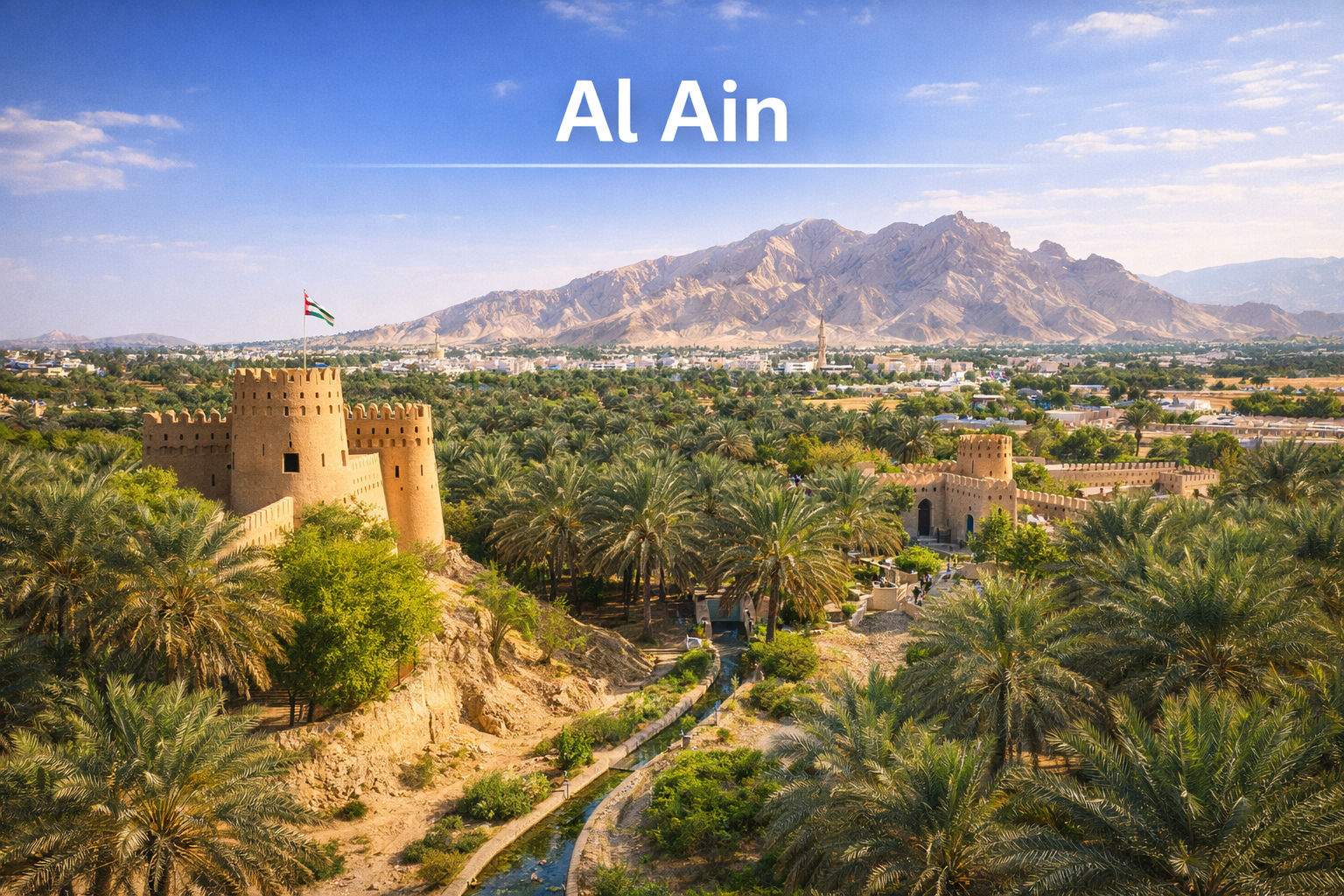
Al Ain
Al Ain is the UAE’s green heart, a historic oasis city where ancient traditions, palm filled landscapes, forts, and mountains come together to tell the story of Emirati roots and resilience.




Highlights
- UNESCO listed oasis and ancient falaj irrigation system
- Lush palm groves earning the name Garden City of the UAE
- Historic forts museums and cultural landmarks
- Views of Jebel Hafeet and surrounding desert landscapes
- Deep connection to Emirati heritage and traditions
Description
Al Ain is a place where nature history and culture exist in rare balance. Known as the Garden City of the UAE, Al Ain stands apart from the coastal skylines with its palm shaded avenues flowing water channels and slower pace of life.
The city is built around a series of natural oases that have supported human settlement for thousands of years. Walking through Al Ain feels grounded and authentic, with historic forts traditional markets and wide open landscapes shaping the experience.
From mountain views to shaded gardens, Al Ain offers visitors a deeper understanding of the UAE’s past while remaining a welcoming and vibrant modern city.
Best Time to Visit
The best time to visit Al Ain is during the morning, when temperatures are cooler and outdoor sites like oases and forts are most comfortable to explore.
October to April is ideal for visiting, offering pleasant weather for walking, sightseeing, and mountain trips. Summer visits are best planned early in the day.
Fun Facts
- Al Ain is one of the oldest continuously inhabited areas in the region
- The falaj irrigation system is over three thousand years old
- It is the birthplace of the UAE’s founding father Sheikh Zayed
- Al Ain Oasis is a UNESCO World Heritage Site
- The city is located near the Oman border
Itinerary
1-Day Ideal Visit (Recommended)
Morning:
Visit Al Ain Oasis and walk through shaded palm groves.
Explore nearby historic forts and museums.
Midday:
Enjoy lunch in the city.
Visit cultural sites or traditional markets.
Afternoon:
Drive up Jebel Hafeet for panoramic views.
Relax at hot springs or scenic viewpoints.
2-Day Relaxed Option
Day 1 focuses on heritage and oases.
Day 2 explores mountains gardens and cultural centers.
Photo Spots
- Al Ain Oasis palm pathways
- Jebel Hafeet mountain viewpoints
- Historic forts and mud brick architecture
- Falaj water channels
- Sunset over desert and mountains
Pro Tips
- Wear comfortable walking shoes for oasis paths
- Bring water especially during warmer months
- Plan outdoor visits early in the day
- Respect cultural and heritage sites
- Combine city sights with mountain views
History
Al Ain’s history stretches back thousands of years, shaped by its natural springs and fertile land. The oasis made it a vital stop for early settlers, traders, and nomadic tribes, allowing agriculture to flourish in an otherwise harsh desert environment.
The development of the falaj irrigation system enabled water to be distributed efficiently, supporting palm groves and crops that sustained generations. Over time, forts were built to protect the oasis and its people, many of which still stand today.
Al Ain holds special significance as the hometown of Sheikh Zayed bin Sultan Al Nahyan, whose vision helped shape the modern UAE. Today, the city preserves its heritage while continuing to grow as a cultural and educational center.
Listen as a Song
A destination brought to life through music by Triplara.com
⭐ A story you feel, not just hear 🎧

🎟️ Ready to Plan Your Visit?
Most visitors book tickets in advance to avoid queues and sold-out days.
See Tickets
 Location Map
Location MapMore to explore
Automatically pulled from related stories and nearby places.
Related Stories

Abu Dhabi Liwa Desert Safari with Lunch
Escape the city and journey deep into the Liwa Desert on a guided safari featuring golden dunes, cultural experiences, roundtrip transfers from Abu Dhabi, and a relaxing lunch in an authentic desert setting.
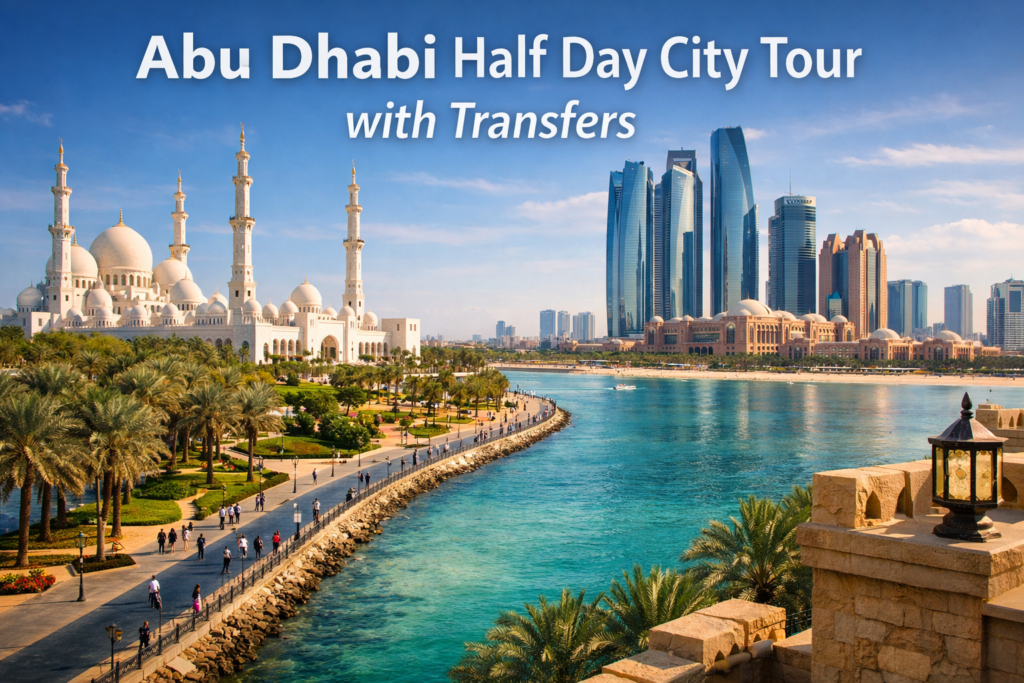
Abu Dhabi Half Day City Tour with Transfers
Explore Abu Dhabi in just half a day with a guided city tour covering grand mosques cultural landmarks and modern attractions complete with comfortable roundtrip transfers for a smooth and stress free experience.

City Sightseeing Dubai & Abu Dhabi Hop On Hop Off Bus Tour
Discover Dubai and Abu Dhabi effortlessly with City Sightseeing hop on hop off bus tours covering top landmarks, cultural icons, beaches, and skylines with flexible routes and audio guides.

La Perle Live Show with Abu Dhabi Premium Day Trip
Experience the magic of La Perle live show in Dubai combined with a premium Abu Dhabi day trip. From breathtaking aqua stunts and world class performances to iconic landmarks like Sheikh Zayed Grand Mosque, this curated journey blends entertainment, culture, and luxury into one unforgettable experience.
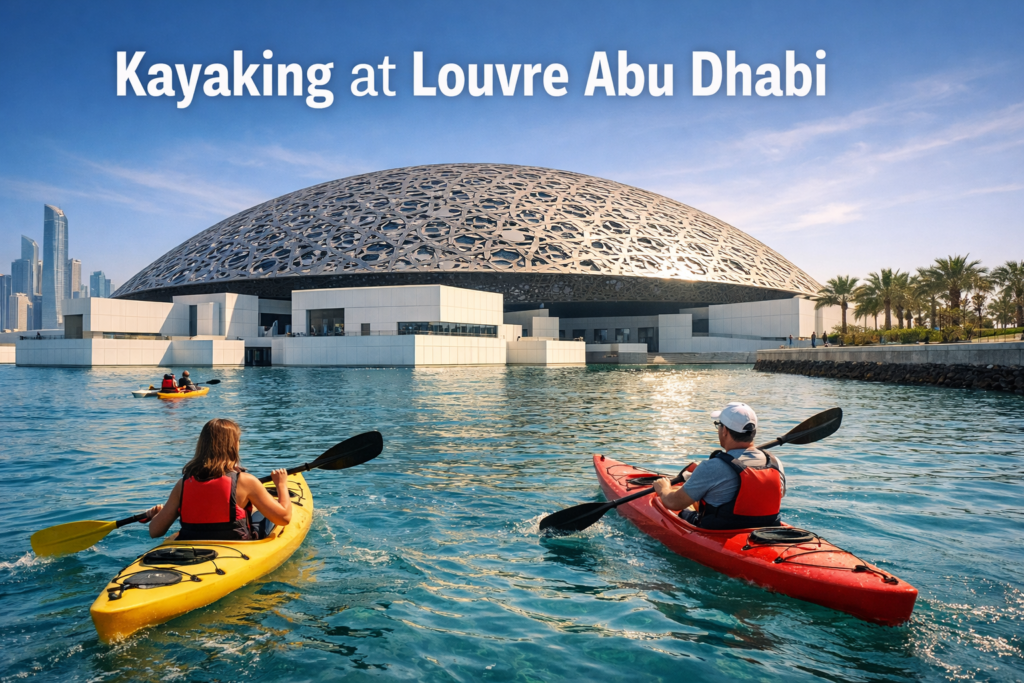
Kayaking in the Louvre Abu Dhabi
Experience kayaking at Louvre Abu Dhabi as you glide through calm waters beneath the iconic dome, offering a rare perspective of art, architecture, and nature blended into one unforgettable journey.

Abu Dhabi: Morning Desert Safari Tour
Experience the magic of the Arabian desert at sunrise with an Abu Dhabi Morning Desert Safari. Enjoy thrilling dune bashing, peaceful camel rides, golden sand views, and authentic desert moments all before midday, perfect for travelers with limited time.