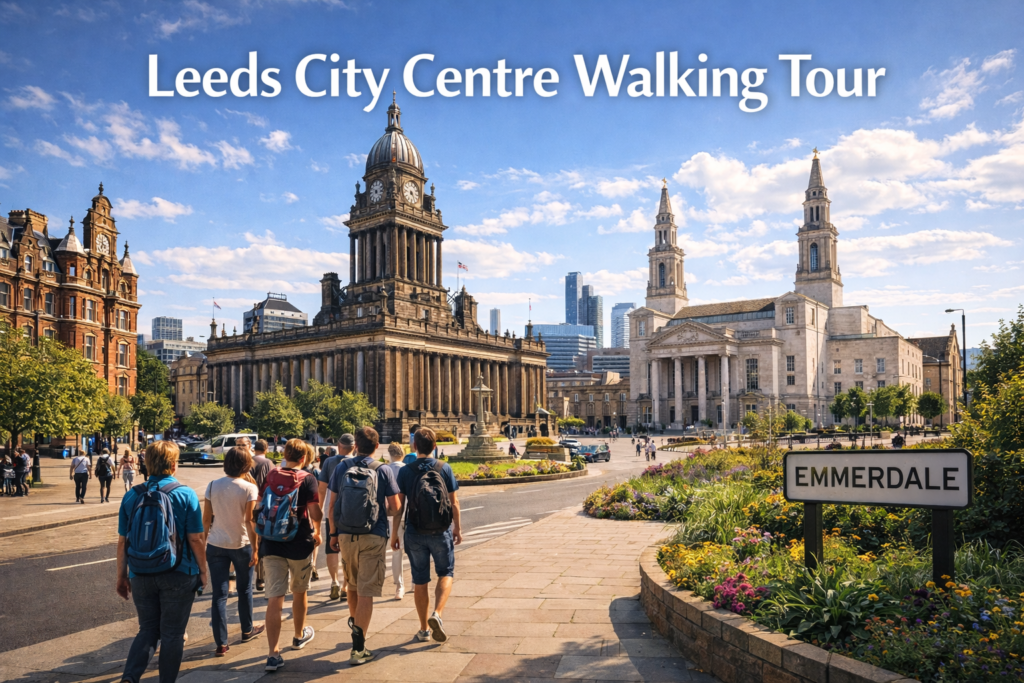
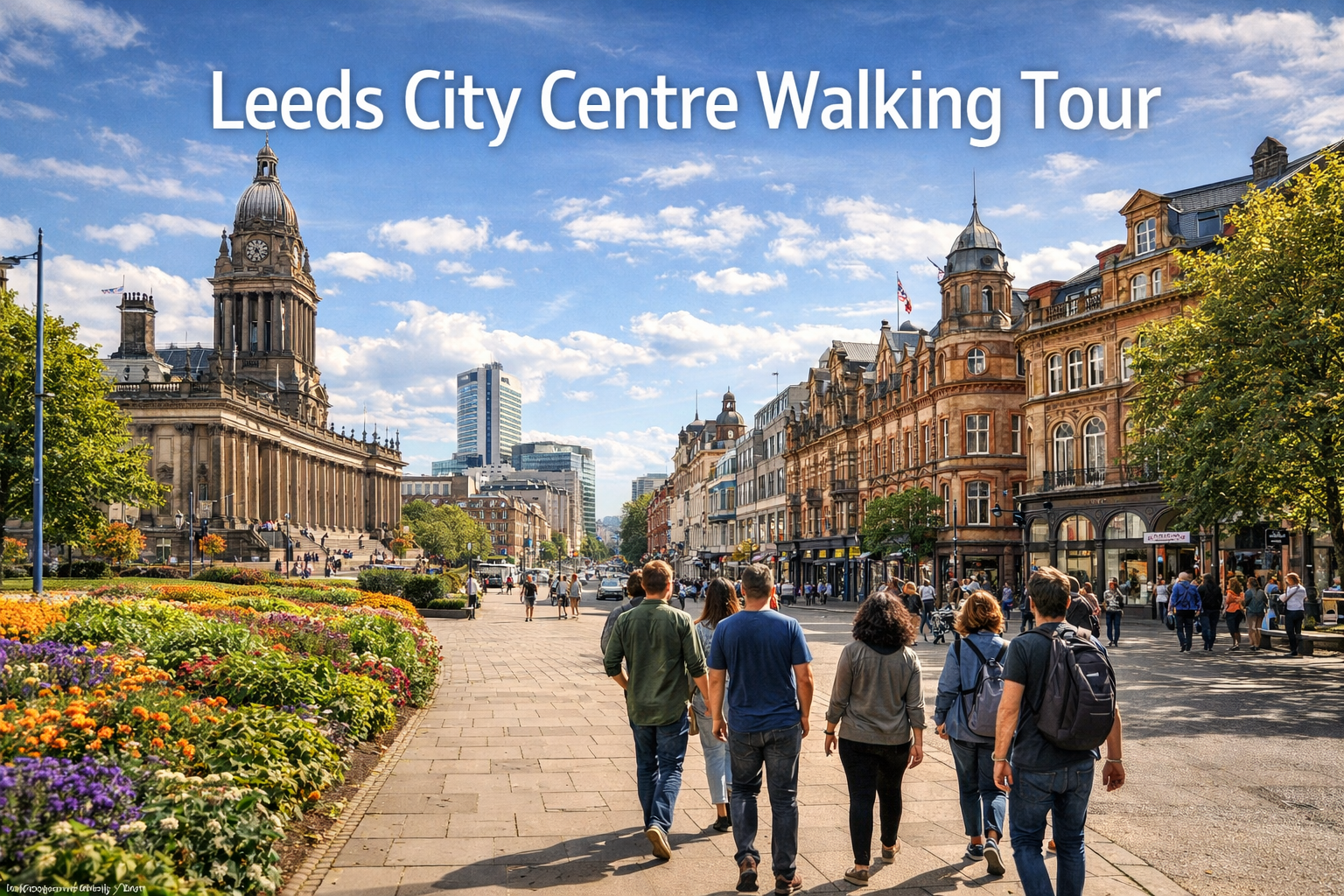
Leeds City Centre Walking Tour
Walk through the heart of Leeds and uncover a city shaped by industry, culture, and creativity, where historic streets blend seamlessly with bold modern architecture.




Highlights
- Guided walk through the heart of Leeds city centre
- Blend of historic landmarks and modern architecture
- Stories of industry, culture, and urban transformation
- Easy paced route suitable for all ages
- Ideal introduction to Leeds for first time visitors
Description
The Leeds City Centre Walking Tour reveals the layers of a city that has continually reinvented itself. From elegant Victorian arcades to contemporary waterfront developments, the walk showcases how Leeds balances heritage with modern ambition.
As you move through streets, squares, and hidden passages, the city’s character becomes clear. Former industrial spaces sit beside thriving cultural venues, independent shops, and striking modern buildings that reflect Leeds’ confident identity.
Guided storytelling brings context to what you see, connecting architecture, people, and events into a narrative that makes the city feel alive and accessible rather than distant or academic.
Best Time to Visit
The best time to enjoy a Leeds City Centre Walking Tour is late morning or early afternoon when the city is active but not overwhelming. These hours offer comfortable light and an energetic atmosphere.
Spring and summer provide pleasant weather and lively streets, while autumn adds colour and texture to the cityscape. Tours run year round, with winter offering a quieter and more reflective experience.
Fun Facts
- Leeds has one of the largest city centre economies in the UK outside London
- The city features some of Europe’s oldest surviving shopping arcades
- Many canalside warehouses have been transformed into modern spaces
- Leeds played a major role in the Industrial Revolution
- The city is known for its strong music and cultural scene
Itinerary
Half Day Ideal Visit Recommended
Morning:
Begin in the historic core of the city.
Explore arcades, civic buildings, and early commercial streets.
Midday:
Walk towards modern developments and waterfront areas.
Learn about regeneration and changing urban life.
Afternoon:
End near cultural quarters with time to explore independently.
Enjoy cafés, galleries, or shopping after the tour.
Photo Spots
- Victorian shopping arcades
- Historic civic buildings and squares
- Modern skyline and glass architecture
- Canal and waterfront reflections
- Street level views capturing daily city life
Pro Tips
- Wear comfortable shoes for city walking
- Check weather forecasts and dress in layers
- Bring a camera or phone for architectural details
- Arrive a few minutes early to meet the guide
- Stay after the tour to explore nearby districts
History
:contentReference[oaicite:0]{index=0} began as a small settlement near the River Aire and grew steadily through the medieval period as a market town. Its true transformation came during the Industrial Revolution, when textile production turned Leeds into one of Britain’s most important manufacturing centres.
Throughout the nineteenth century, wealth from industry reshaped the city centre with grand civic buildings, arcades, and warehouses. Railways and canals connected Leeds to national and global trade networks, accelerating its growth and influence.
In the late twentieth century, as heavy industry declined, Leeds adapted once again. Former industrial spaces were redeveloped into offices, cultural venues, and residential areas. Today, the city centre reflects this layered history, combining industrial heritage with modern design and a vibrant urban economy.
Listen as a Song
A destination brought to life through music by Triplara.com
⭐ A story you feel, not just hear 🎧

🎟️ Ready to Plan Your Visit?
Most visitors book tickets in advance to avoid queues and sold-out days.
See Tickets
 Location Map
Location MapMore to explore
Automatically pulled from related stories and nearby places.